Long Meadow Ranch
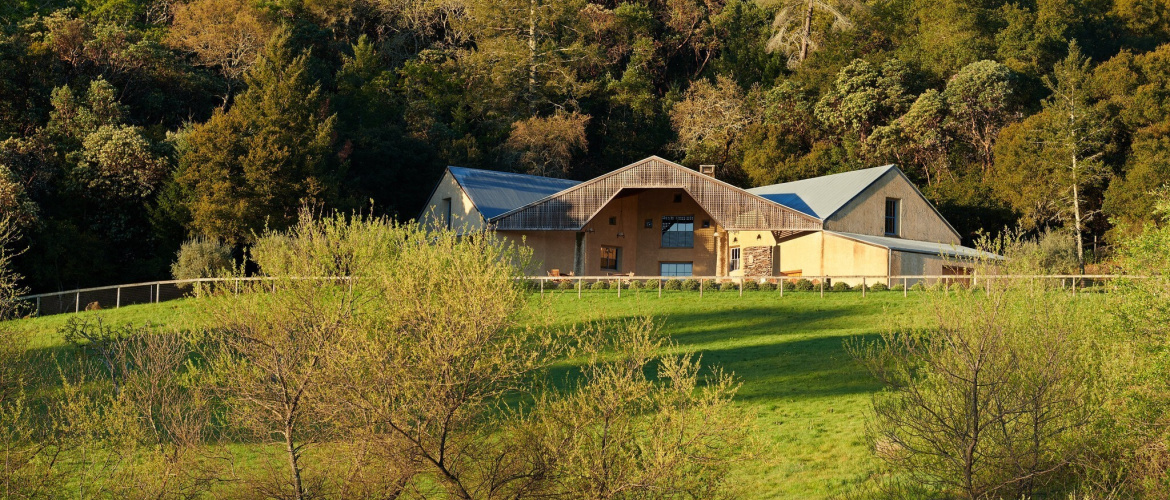
February has its own quiet charm in the world of wine. It is a time when work shifts from the vineyards to the cellars, when wines slow down, settle, and reveal their true character. And that's exactly what Long Meadow Ranch is like – a family winery in Napa Valley that is built on patience, respect for the land, and an honest approach to every detail. Their wines are not impressive at first glance, but they are all the more captivating after the second and third glass.
History and a return to tradition
The roots of Long Meadow Ranch date back to the second half of the 19th century, when E. J. Church established a thriving farm with vineyards, orchards, and olive groves. However, the Prohibition era marked a major turning point, and the ranch gradually fell into decline. It remained abandoned and overgrown with forest for decades until it was purchased by the Hall family in 1989. They embarked on a sensitive restoration of the entire area, clearing the land, replanting vineyards and orchards, and gradually restoring the place to its former glory.
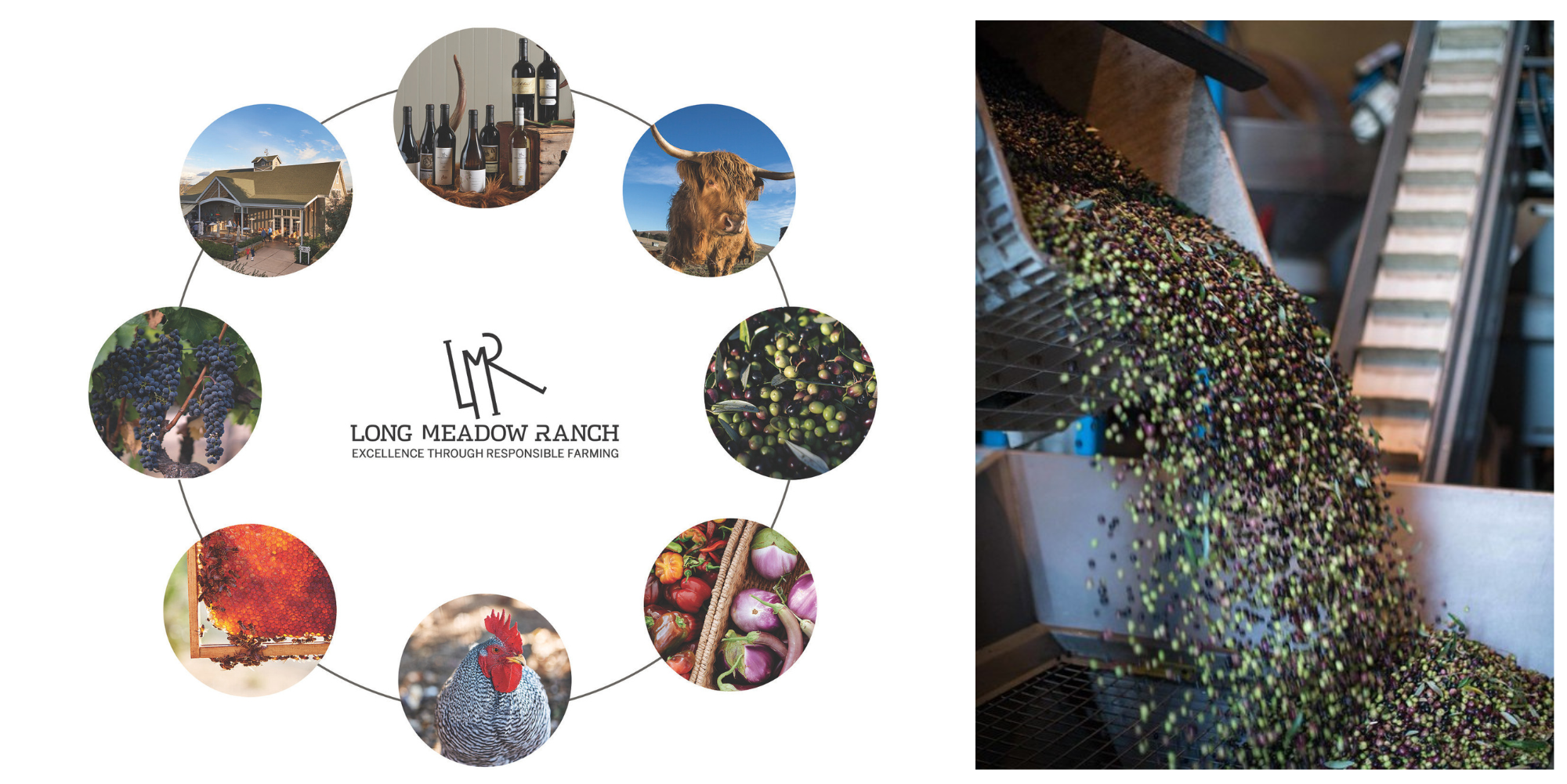
Today, Long Meadow Ranch spans more than 2,000 acres across three California counties and is a vibrant, interconnected agricultural complex. Grapes, olives, fruits, and vegetables are grown here, and cattle and horses are raised on the pastures. Wine is a natural result of a broader philosophy—to farm in a way that keeps the land healthy for future generations.
Vineyards and its character
Mountain Estate (Mayacamas)
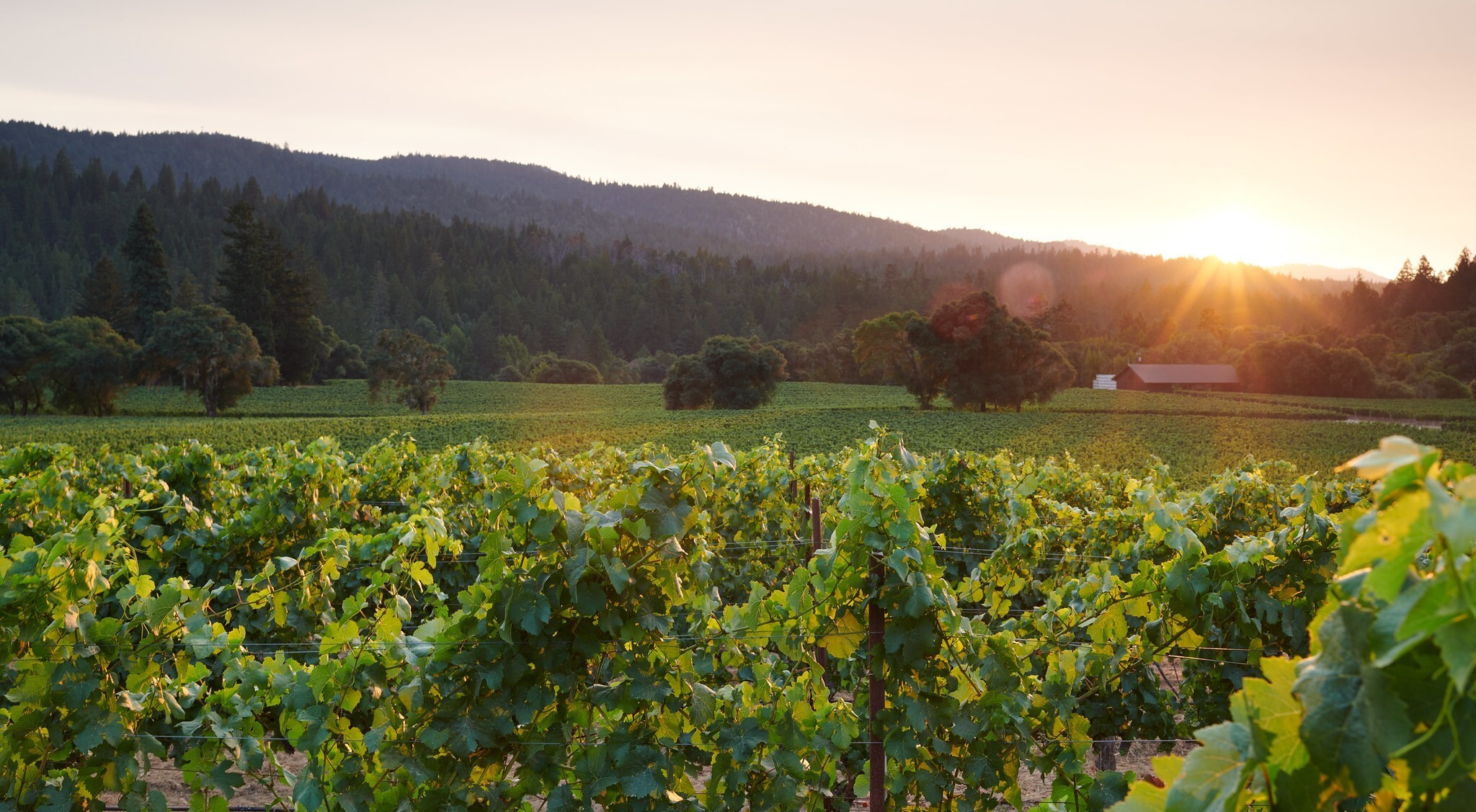
The home vineyard lies high on the foothills of the Mayacamas Mountains above Rutherford Bench. Sixteen acres are planted with Cabernet Sauvignon, Merlot, Sangiovese, and Cabernet Franc. In addition to vineyards, you will find olive groves, pastures, and an edible garden, which was started by the founders' sons when they were children—and which later inspired the entire concept of growing vegetables on the ranch.
Rutherford Estate
The land of the former riverbed is rich in minerals and ideal for Cabernet Sauvignon and Merlot in particular. In addition to these red varieties, Sauvignon Blanc is also successfully grown here. The estate also includes beehives and laying hens. Bees pollinate the vineyards and gardens and produce honey, while chickens contribute not only eggs but also valuable material for compost. Everything here fits into the natural cycle.
Anderson Valley Estate (Mendocino)
The vineyards on the diverse terrain near the Navarro River are influenced by cool ocean breezes and fog from the Pacific. These create ideal conditions for the slow ripening of Pinot Noir, Chardonnay, and Pinot Gris, which acquire elegance, freshness, and a distinctive expression of their origin.
Together, these locations demonstrate the crucial role played by terroir—each vineyard has its own rhythm and character, and Long Meadow Ranch wines bear the clear signature of the place where they come from.

The farm as a whole
Long Meadow Ranch is not just a winery, but a sophisticated agricultural ecosystem. In addition to vineyards, olive trees are grown here, Highland cattle, poultry, and bees are raised, and the farm also produces its own compost and fertilizer. More than 500 varieties of traditional fruits and vegetables prove that even in an area known for monoculture, it is possible to farm diversely and with respect for nature.
The ranch's products are also reflected in the gastronomic concept of the Farmstead restaurant, where the "farm-to-table" philosophy becomes a natural part of the experience. Guests can taste wines and ingredients right where they are produced.
Olive groves and other traditions
The Prato Lungo olive groves are among the oldest in Napa Valley, dating back to the 1870s. The Halls restored them in the 1990s and added Italian cultivars to preserve their original character. Today, they produce Napa Valley Select extra virgin olive oil.
The pastures of Tomales Station Ranch are home to one of the largest herds of Highland cattle in California. The animals graze freely without hormones or antibiotics and rotate pastures to maintain the balance of the landscape.
Sustainability as a principle
The winery's philosophy, summed up in the motto "Excellence through responsible farming," is not a marketing phrase but an everyday practice. The ranch operates on the principle of full circle farming—a closed system in which each part of the farm supports the whole. Solar energy powers the operation, organic waste is returned to the soil as compost, and individual activities naturally follow on from one another.
Philanthropy and the family legacy
The Hall family sees caring for the landscape and community as an integral part of their work. After the tragic loss of their son Timothy, they established the Timothy Hall Foundation, which supports educational programs in the arts and sciences. They are also involved in land conservation—more than 800 acres of their land is now permanently protected from development, helping to preserve water quality, reduce erosion, and protect local vegetation.
The Corkage for Community program also supports the community, with fees for opening bottles of wine brought to the restaurant going to a different non-profit organization each month.
Long Meadow Ranch is proof that a large winery does not have to lose its family spirit or respect for the land from which it originates. It combines tradition with a modern approach, winemaking with farming, and quality with responsibility. The result is wines with personality – quiet, precise, and memorable, just like the place they come from.
Sources: https://www.longmeadowranch.com/
12.2.2026