The Language of Yes
What does the name The Language of Yes mean?
The name of the winery The Language of Yes may sound unusual at first, but its origin reaches deep into European history. It is a loose translation of the term “La Langue d’Oc,” which in the Middle Ages referred to the linguistic and cultural identity of the inhabitants of southern France and surrounding regions. This term was used to distinguish the south of France from the north, where “La langue d’oïl” was spoken, and it is also the precursor of today’s Provençal language. It was closely associated with the culture of troubadours, who celebrated love, passion, and a deep connection to their land in their songs – and this tradition became the inspiration for the winery’s philosophy.
Winery philosophy: wine as an expression of love for place
The core idea of The Language of Yes is that great wine can only be made where the winemaker truly loves their land. Just as troubadours expressed emotions through poetry, the winemakers of this project express their relationship to the landscape through wine. The focus is on capturing the identity of the place of origin as faithfully as possible, rather than transforming it. Winemaking is carried out with a very gentle touch, allowing the natural expression of the vine, grapes, and winemaker, so that the wine symbolically “says yes” to nature, terroir, and authenticity.
The project connects the cultural heritage of southern France with the conditions of California’s Central Coast. The winery does not aim to copy French models but uses them as inspiration to search for its own expression in a different climatic environment. Thanks to the sunny climate and long growing season, there is room to explore new forms of complexity and terroir expression, with the goal being discovery rather than imitation.
Behind The Language of Yes stands legendary Californian winemaker Randall Grahm, one of the most distinctive figures in modern American winemaking. Grahm is best known for his long-standing interest in grape varieties typical of southern France and for his terroir-driven approach, which he has developed in California for decades. His work has always balanced between tradition and experimentation – instead of pursuing a uniform style, he focuses on originality, authenticity, and the clearest possible expression of place.
Randall Grahm is also the founder of the iconic Bonny Doon Vineyard, where he built a reputation as a “winemaking innovator” thanks to his work with unconventional grape varieties and bold winemaking approaches. The Language of Yes builds on this philosophy but takes it further – focusing more on finesse, detail, and a deeper connection to specific Central Coast vineyards. In collaboration with Joe C. Gallo of Maze Row Wine Merchant, Grahm created a platform for more open and experimental work, allowing him to fully explore the potential of Rhône varieties in a new context.
His approach is based on the belief that wine is not just a product, but a cultural expression of landscape, climate, and human work. That is why The Language of Yes emphasizes minimal intervention in the cellar, respect for the vineyard, and the effort to let the wine “speak its own language.”
Grape varieties and their character
The rosé wines of The Language of Yes are based on the rare Tibouren grape, originating in Provence and also found in Liguria under the name Rossese. Tibouren gives wines a fruity and juicy character complemented by a subtle herbal note reminiscent of Mediterranean scrubland (garrigue), and it is also valued for its aging potential. In the blend, it is complemented by Cinsault, a variety often underestimated but offering an elegant expression with cherry notes and delicate aromatics in cooler climates. Both varieties come from the Creston Ridge Vineyard in Paso Robles, where yields are carefully controlled to ensure even ripening.
The red wines of The Language of Yes in the e-shop are based on two key Rhône varieties – Grenache and Syrah, which form the backbone of their character. Grenache brings juiciness, fruitiness, and a softer structure with emphasis on red fruit, while Syrah adds depth, spice, and its characteristic peppery note. Together, they create balanced wines with a strong terroir expression of California’s Central Coast, where the cooler vineyard climate allows slow ripening and the development of aromatic complexity. The range includes both single-varietal expressions and blends where Grenache and Syrah naturally complement each other, such as the cuvée Sinso.
Wine aromatics: rotundone and sesquiterpenes
A key role in the aromatic profile of these wines is played by rotundone, the compound responsible for the characteristic peppery note of Syrah. Rotundone originates from a broader group of natural aromatic compounds called sesquiterpenes, which are part of the vine’s metabolism and can be seen as a “chemical library of aromas” including herbal, woody, and spicy notes. Their formation is strongly influenced by cooler climates, lower sunlight intensity, and longer ripening periods, all of which enhance wine complexity.
Winemaking approach: minimalism and natural processes
The philosophy of The Language of Yes is based on minimalism and respect for natural processes. Instead of shaping the wine through intervention, the winery uses gentle techniques that support its natural evolution, such as whole-cluster fermentation, gentle extraction, long lees aging, and reductive aging that limits oxygen exposure and preserves freshness. Passerillage (partial drying of grapes after harvest) is also used to increase concentration and complexity.
Lees aging adds texture, fullness, and a creamy character to the wine, while vineyard work focuses on biodiversity, soil health, and sustainability. Practices such as biochar and compost application are explored to improve water retention and microbial life in the soil.
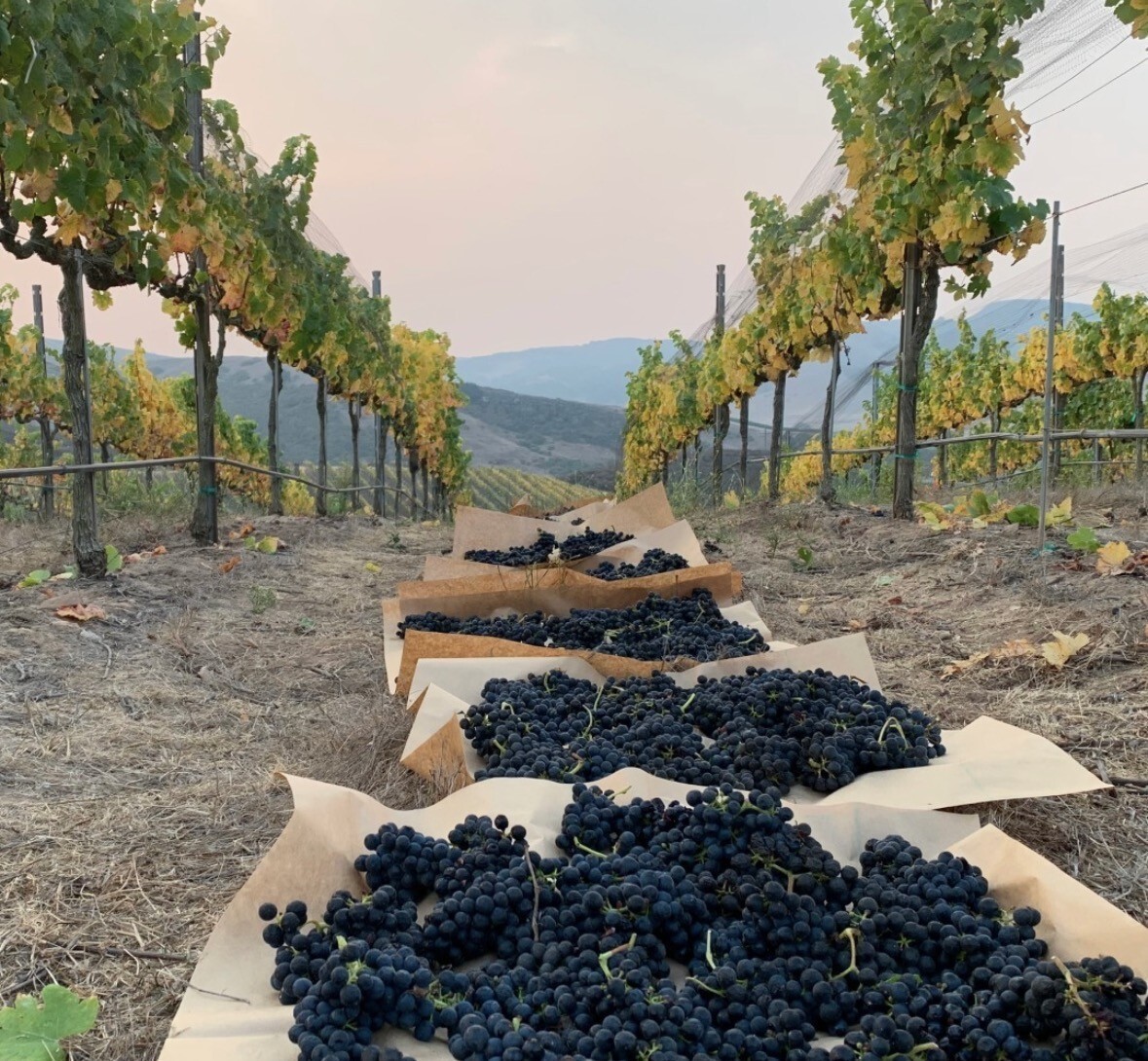
The Language of Yes is not a traditional winery, but rather a long-term project of discovery. Its goal is not to create a single style, but to explore how wine can naturally emerge in California and how terroir can express its authenticity and character.
June 8, 2026
Sources:
https://www.languageofyeswine.com/
https://daily.sevenfifty.com/the-science-of-rotundone-in-wine/