Blue Rock Vineyard
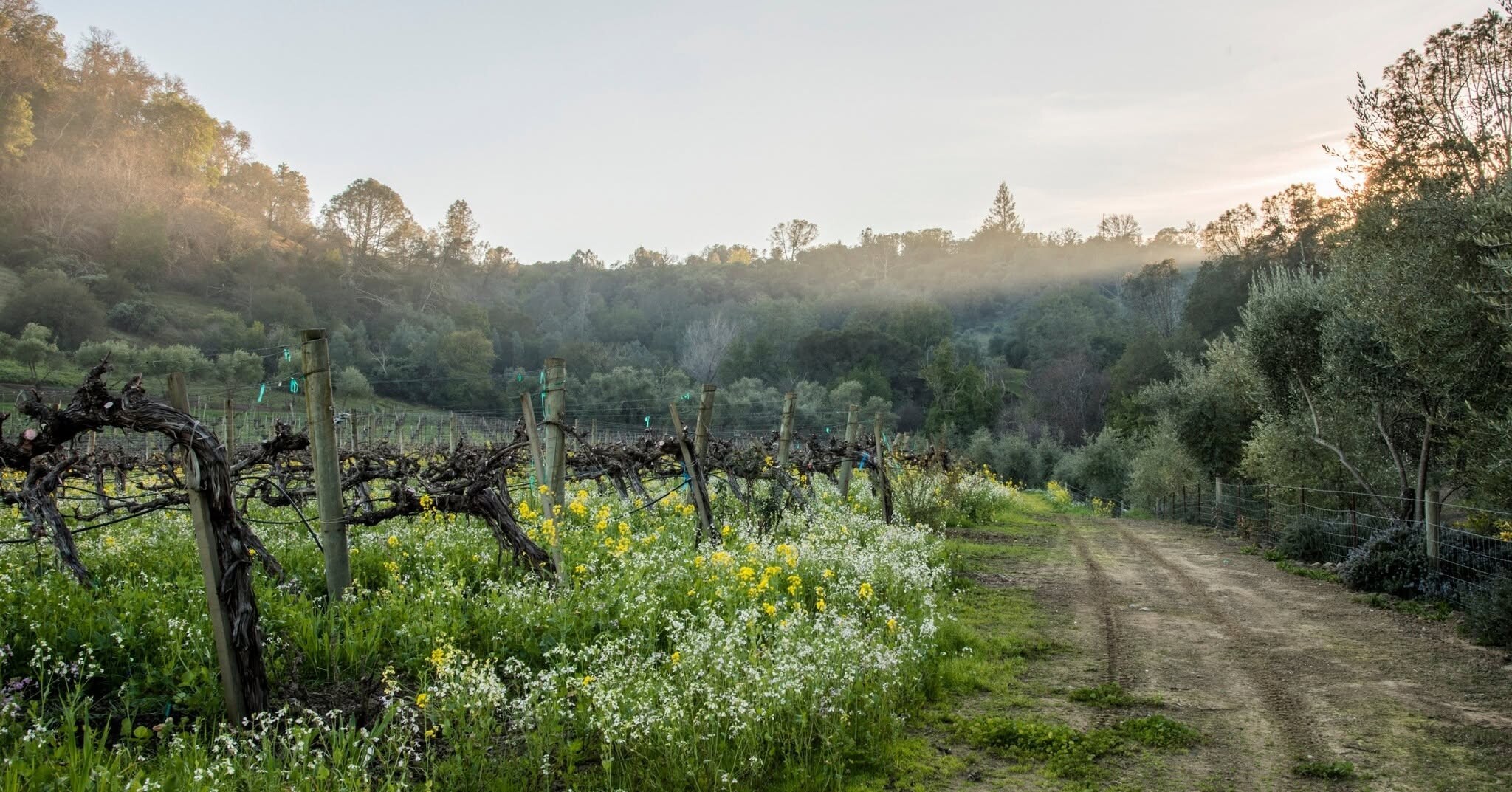
Today, we invite you to the picturesque Alexander Valley in California’s Sonoma County, where Blue Rock Vineyard is nestled among rolling hills, vineyards, and old olive trees. At first glance, looking out across the valley, you might think you are not in California at all, but rather in Tuscany. The golden hills, rows of vines, olive trees, and historic stone buildings create a landscape that feels surprisingly European. Yet Blue Rock is firmly rooted in California and its unique landscape. And it is precisely this combination of two worlds that gives the winery its distinctive character.
A History Dating Back to 1880
The story of this place began as early as 1880, when Italian immigrants settled here. They brought with them not only their experience in growing grapes, but also their love of olive trees and winemaking traditions. They established the Villa Maria winery on the estate. Its operation was later interrupted by Prohibition, and the winery remained inactive for many years.
A new chapter began in 1987, when Kenny and Cheryl Kahn purchased the estate. They decided to bring the property back to life and gradually restored not only the winery itself, but also the historic character of the entire estate. However, their journey toward owning a winery had begun much earlier.
Kenny grew up on a farm in Mississippi, and wine was not initially a part of his everyday life. He was raised in an environment where food was simple and beer or bourbon were more traditional choices when it came to drinking. A turning point came through his neighbor, Milton Picard, who was a passionate collector of great wines from Bordeaux and Burgundy. It was through him that Kenny was first introduced to the world of fine wine. One of the first bottles that truly caught his attention was a 1978 Beaulieu Vineyard Georges de Latour Cabernet Sauvignon.
Around the same time, he met Cheryl. They met on a blind date and, according to Kenny’s recollections, there was an immediate spark between them. Together, they also began exploring the world of food and wine, and gradually a dream took shape: one day, they would create a place of their own where good wine, food, and the way of life they had fallen in love with during their travels in Europe could come together. Europe had a major influence on the direction their lives would eventually take. Kenny and Cheryl traveled by bicycle through the wine regions of Burgundy, the Loire Valley, and Bordeaux, falling in love not only with the wines, but also with the atmosphere and way of life surrounding them. Small wineries, a connection to the land, centuries of tradition, and the natural relationship between wine, food, and sharing a table – all of this would later become part of their vision for Blue Rock.
In 1985, they moved to San Francisco. Kenny dreamed of finding a winery or vineyard of his own, but he also knew that enthusiasm alone would not be enough. He therefore began working in trading, while Cheryl worked as a neuroradiologist, and her income helped gradually finance their shared dream. For two years, they searched primarily in Napa Valley. Land prices were already very high there, however, so their attention gradually shifted to Alexander Valley, which in the mid-1980s was still far less well known than it is today.
In 1987, they purchased a neglected 100-acre estate with a historic winery dating back to 1880. The original stone house and winery were in poor condition and uninhabitable. But they had something that could not be recreated through new construction – history, character, and land with enormous potential. Kenny and Cheryl decided to give the place a new life. During the first few years, they focused primarily on restoring the estate and its vineyards. They replanted the vines with five Bordeaux varieties and also added a small planting of Syrah. The first harvest came in 1988, and Kenny still remembers it as an extraordinary moment – the first grapes, the first barrel of wine, and the first autumn spent among new friends in California.
At first, they sold their grapes to other wineries. For example, Benziger Winery used the grapes to produce a wine identified by its Blue Rock vineyard origin. It was not until 1999 that the first Blue Rock estate wine was produced. At the time, Kenny worked with local winemaker Nick Goldschmidt, and together they produced their first 500 cases of wine.
When you look at Blue Rock today, it is clear that this is no ordinary winery. It is the result of nearly four decades of work by two people who moved to California with a relatively simple dream – to create a place where they could bring together wine, food, and a European way of life. From a neglected estate, they built a winery that still retains the atmosphere of an old California estate while continuing to follow their original vision: making wine with respect for the place, the land, and its history.
When the Land Tells Its Own Story
The name Blue Rock refers to the bluish rocks and pebbles of serpentinite found in the local soil. And, as in many other California wineries, terroir plays one of the leading roles here. The Blue Rock vineyards stretch across the gently sloping terrain of Alexander Valley and are planted primarily with classic Bordeaux varieties – Cabernet Sauvignon, Cabernet Franc, Merlot, Malbec, and Petit Verdot. There is also Syrah, which was planted on the estate in 1993. Warm, sunny days and cooler nights create conditions in which the grapes can ripen slowly while retaining their freshness and distinctive character. The winery does not try to mask the terroir. Quite the opposite. The wines are made in small batches directly on the estate, with the aim of preserving the character of each variety and the sense of place from which it comes.
„We don't make wine, we raise it.“
One sentence captures the philosophy of Blue Rock particularly well: “We don't make wine, we raise it.” According to the winery, wine does not begin in the cellar. Its story starts in the vineyard – in the soil, in the care given to the vines, and in respect for nature. Blue Rock therefore also places great emphasis on sustainability. The winery produces its own compost, limits the use of chemical treatments, and recycles water from the winemaking process, which is then used to irrigate the vineyards. Another interesting detail is the use of steam to clean the barrels. According to the winery, this method uses significantly less water than conventional cleaning methods. Care for the soil and water here is not simply a matter of the present. It is part of an effort to preserve this exceptional place for future generations.
Bordeaux in a California Style
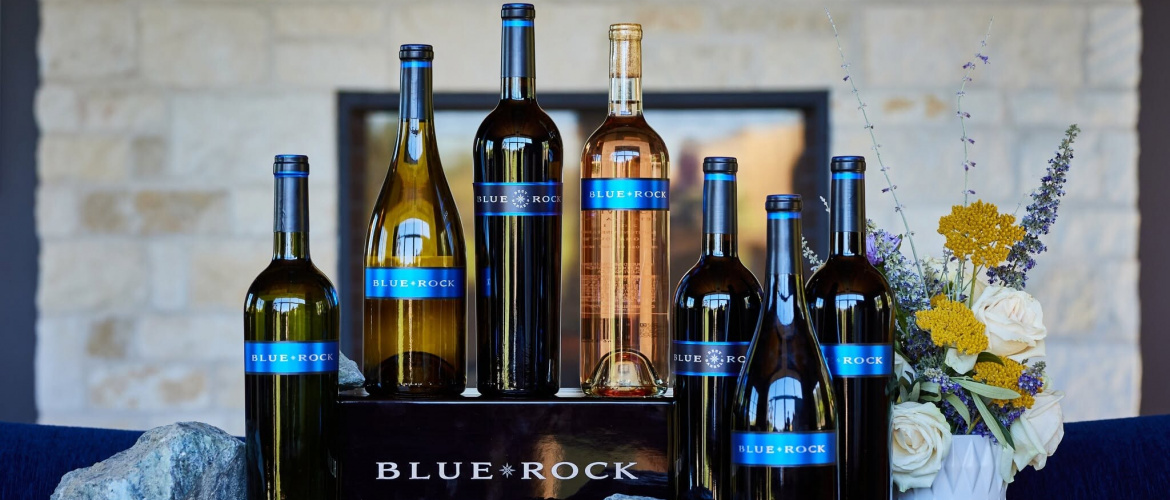
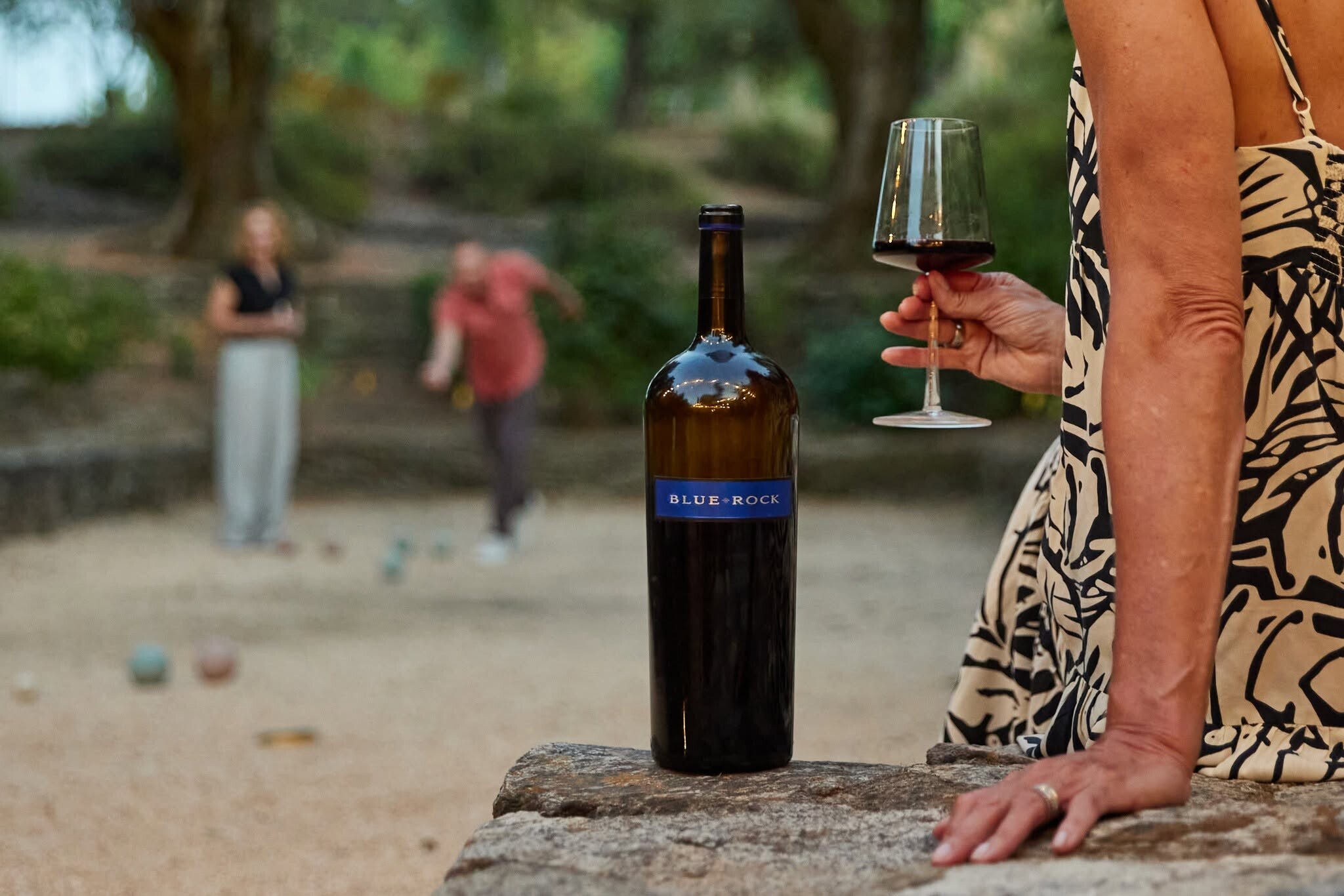
Blue Rock is closely associated with red wines and Bordeaux varieties. Cabernet Sauvignon, Cabernet Franc, Merlot, Malbec, and Petit Verdot form the foundation of the winery’s own blends. And this part of the winery’s production is available from us as well.
One of the winery’s best-known wines is Blue Rock Baby Blue Red. This is a cuvée built around classic Bordeaux varieties, complemented by Syrah. The wine offers notes of dark fruit, blackberries, blueberries, and blackcurrants. It has pleasant structure and velvety tannins, while remaining far from heavy. In our online shop, you can find the 2020 and 2022 vintages, allowing you to compare how the character of the wine changes from one vintage to another.
If you enjoy Cabernet Sauvignon, Blue Rock Cabernet Sauvignon 2021 is certainly worth your attention. The grapes come, among other sources, from some of the oldest plantings on the estate, established in 1987. The wine offers pronounced dark fruit, good structure, and elegant tannins. It has enough power for cellaring, while remaining pleasantly approachable even now.
But Blue Rock is not only about big, structured red wines. Its portfolio also includes wines made from varieties that bring a slightly different expression to the California wine landscape. Blue Rock Baby Blue Pinot Noir 2023 is a more elegant and refreshing choice for those moments when you are in the mood for a red wine but do not want anything too heavy. The Pinot Noir comes from cooler conditions and offers appealing fruitiness and freshness. And if you prefer white wines, you can reach for Blue Rock Baby Blue Blanc 2023. This cuvée of Sauvignon Blanc, Sémillon, and Viognier combines freshness with aromatic character and a touch of richness. It is an excellent match for fish, seafood, or light summer cuisine.
The diversity of these wines shows that Blue Rock is not a winery built around just one style. It brings classic Bordeaux varieties together with California terroir, while also leaving room for fresher and lighter wines. Each has its own character, but they share the same signature – an emphasis on balance, a sense of place, and the natural expression of the grape variety.
Blue Rock Vineyard is one of those places where history truly becomes part of the present. The old olive trees, stone buildings, and original atmosphere of the estate are reminders of its European roots. The surrounding hills, sunshine, and unique terroir of Alexander Valley, on the other hand, make it clear that we are still in California.
Perhaps that is precisely why Blue Rock has such a distinctive character. It is a place where tradition and modern winemaking do not meet as opposites, but as two things that can work together. And you can find that same feeling in the glass – in elegant, structured wines that respect both the grape variety and the place where they were born.
Zdroje:
https://bluerockvineyard.com/about/
https://bluerockvineyard.com/qa-with-kenny-kahn-gapstone-vineyard/
August 5, 2026