Grgich Hills Estate
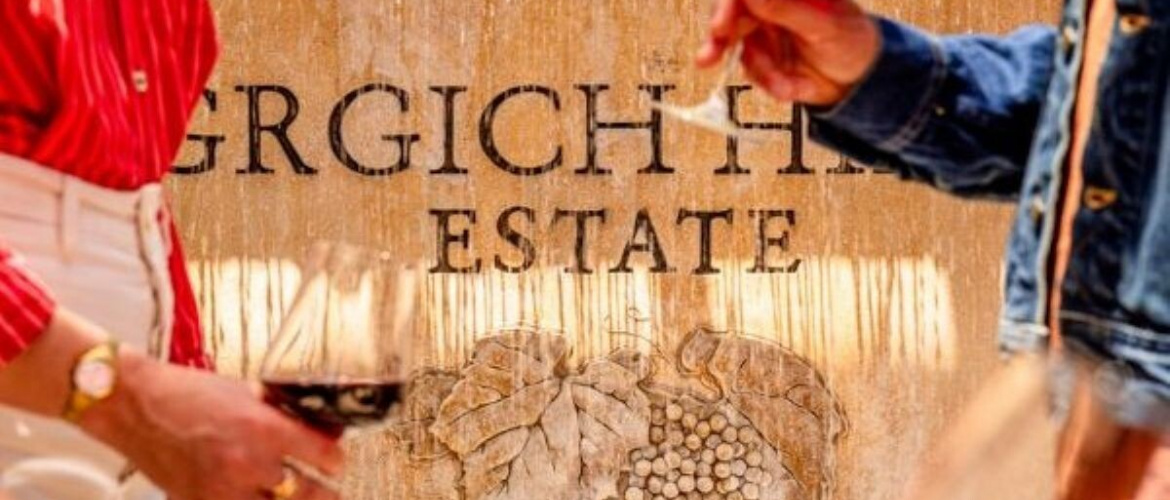
The sun-drenched vineyards of Napa Valley, the morning fog slowly lifting between the sparse vines, and a glass of crisp Chardonnay that tells the story of the place where it comes from. It was here that a legend was born – a winery that forever changed the world’s perception of California wines – Grgich Hills Estate.
Grgich Hills Estate is one of the most iconic wine producers in Napa Valley. This is due not only to the quality of its wines, but above all to the philosophy behind its founding. Moreover, its story began at one of the most pivotal moments in modern winemaking history.
A Legacy That Endures
In 1976, a wine tasting took place in Paris that went down in history as the Judgment of Paris. In that blind tasting, California wines defeated the best French wines—and the world of winemaking was changed forever. Behind the winning Chardonnay from Chateau Montelena stood Croatian immigrant Mike Grgich. It was he who, a year later, decided to found his own winery and imbue every bottle bearing his name with his vision. Together with his friend Austin Hills, he founded Grgich Hills Estate, which gradually became one of Napa Valley’s iconic producers. Mike’s longtime friend Austin Hills remains connected to Grgich Hills Estate to this day. Even after all these years, he remains part of the estate as chairman of the board and continues to devote himself to the family’s agricultural ventures, including olive oil production.
Currently, the winery is led by Mike Grgich’s daughter, Violet. Violet sensitively builds on the family legacy while also giving it a contemporary dimension. Her path to the winery was not straightforward—she studied music at the University of California, Davis, but also pursued biology, chemistry, and oenology. After returning home, she worked her way through every aspect of the winery, from the bottling line to laboratory analysis to daily interactions with visitors in the tasting room.
It was precisely this experience that enabled her to understand winemaking in its entirety. Today, under her leadership, Grgich Hills Estate continues to develop its original philosophy—with an emphasis on quality, respect for nature, and responsibility toward the environment. Thanks in part to this, the winery ranks among the pioneers of regenerative agriculture and holds certification from the Regenerative Organic Alliance.
Mike Grgich: The Story of the Man Who Changed California Wines
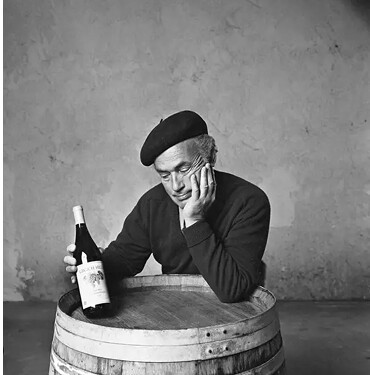
Miljenko "Mike" Grgich, also known as the "King of Chardonnay," is one of the greatest legends of California winemaking. His life journey began in the small Croatian town of Desne, where he grew up as the youngest of eleven children among his parents' vineyards and gardens. Despite the hardships of his youth, studying enology in Zagreb, and fleeing the communist regime to Canada, he eventually made his way to Napa Valley, where he became a key figure in the California wine revolution.
Before his time at Chateau Montelena, he gained experience working with Napa Valley’s most prominent winemakers—such as the legendary André Tchelistcheff at Beaulieu Vineyards, or Robert Mondavi, where he helped create the famous 1969 Cabernet Sauvignon, which was later named the best California Cabernet in Los Angeles.
His breakthrough came during the famous “Paris Judgement” in 1976, when his Chardonnay from Chateau Montelena defeated the best French white Burgundy wines and laid the foundation for Napa Valley’s international reputation. Ironically, he began producing Chardonnay simply because Cabernet needed more time to age—and so luck aligned with his intuition.
In 1977, he founded his own winery, Grgich Hills Estate, together with Austin Hills, where he embodied his philosophy of simplicity and respect for the grapes: “Let the grapes speak. What God has created is better than what man creates.” He later also established a winery on the Croatian Pelješac Peninsula to continue the family tradition and support the winemaking culture of his native Dalmatia.
Mike Grgich died on March 15, 2023, at the age of 100, at his home in Calistoga. Even in his advanced age, he remained active, welcoming visitors to his winery, wearing his signature beret, and entertaining them with anecdotes or aphorisms about wine and life. His legacy, however, extends beyond the winery itself—a combination of knowledge, intuition, and humanity made Mike Grgich an icon whose influence is still evident in every bottle of Grgich Hills. His philosophy and approach to wine live on through the family winery, which continues to blend Old World tradition with New World boldness and vision.
Vineyards and the Philosophy of Terroir
One of the key factors that sets Grgich Hills apart from many other wineries in Napa Valley is its complete control over the origin of its grapes. All wines are produced exclusively from the winery’s own vineyards, allowing it to capture the authentic character of each terroir. Each vineyard leaves its own unique imprint on the final wine—through distinct soils, microclimates, and sun exposure. The result is wines that are not uniform, but rather tell the story of a specific place.
The winery cultivates several of its own vineyards across Napa Valley—including in the Rutherford, St. Helena, Carneros, and Calistoga regions. Each of these locations offers distinct conditions that are reflected in the character of the resulting wines.
Rutherford is known for its gravelly, well-drained soils, which produce structured Cabernets with the characteristic “Rutherford dust” minerality. In contrast, the cooler Carneros, influenced by its proximity to San Pablo Bay, provides ideal conditions for varieties like Chardonnay and Pinot Noir—wines with higher acidity, elegance, and freshness. The diversity of terroirs allows the winery to work with a wide range of styles without losing its identity. Each vineyard is viewed as a separate ecosystem, whose character must be respected and allowed to shine.
In the cellar, the winemakers continue to follow this philosophy of minimal intervention. Here, wine is not created as a technological product, but as a natural process. Spontaneous fermentation, an emphasis on balance, and respect for the raw materials result in wines that retain their natural structure, freshness, and elegance.
It is precisely this philosophy that is fully reflected in the style of the wines. Grgich Hills is best known for its Chardonnay, which differs significantly from the typical California style. Unlike many wineries in Napa Valley, the Chardonnay here does not undergo full malolactic fermentation. The result is a wine with more pronounced acidity, freshness, and purity, in which minerality and the natural character of the grapes stand out, rather than buttery and heavy tones.
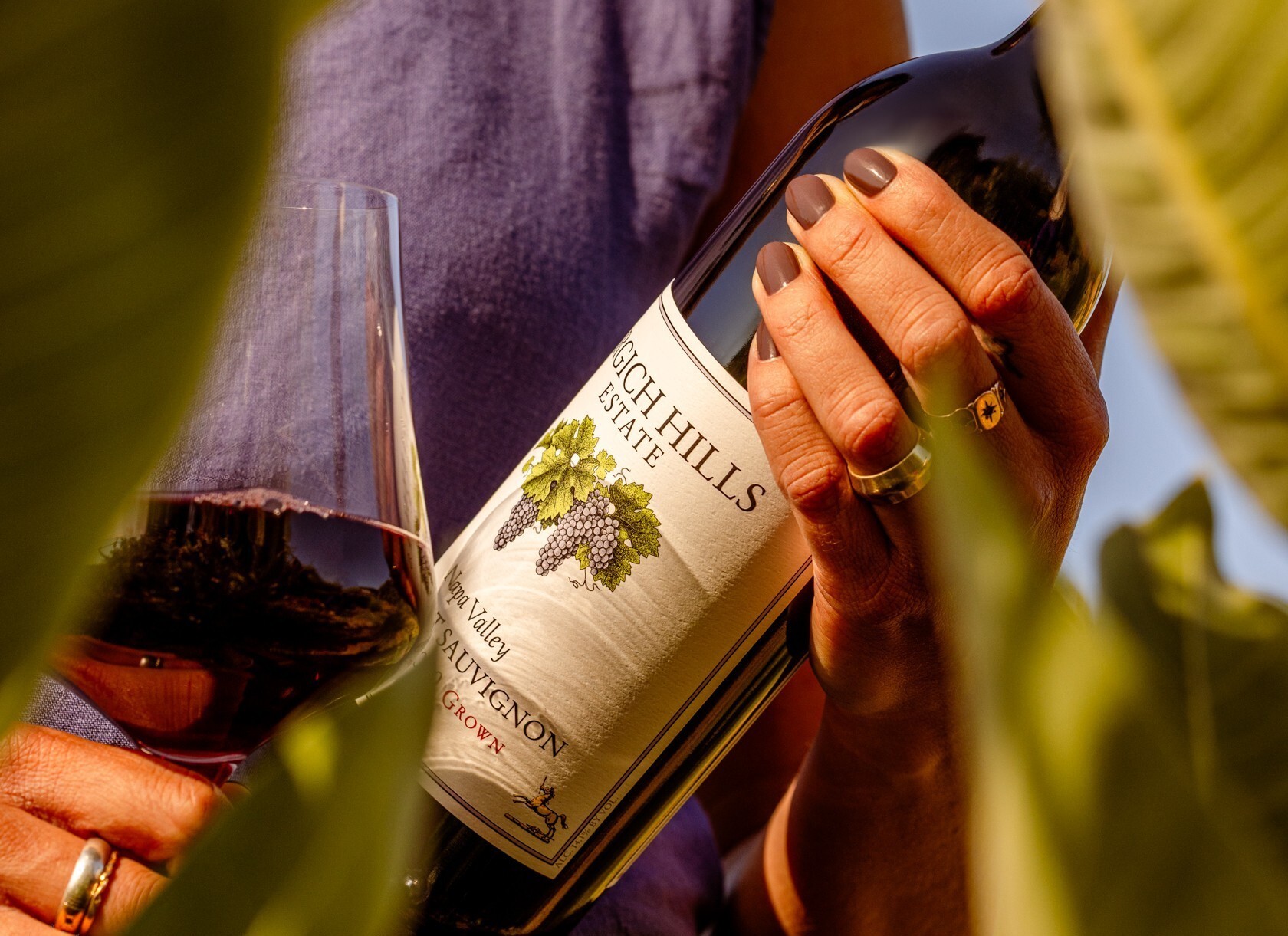
A similar approach can be observed in the red wines, particularly the Cabernet Sauvignon. These are structured yet elegant, with an emphasis on balance, soft tannins, and aging potential. These are not wines that dazzle with power, but rather ones that gradually reveal their complexity.
Spontaneous fermentation, sensitive use of wood, and the absence of unnecessary technological interventions allow each wine to be an authentic reflection of the vintage and the specific vineyard.
The vineyards for Napa Valley Cabernet Sauvignon are located in the Yountville area of Napa Valley and form the backbone of the vineyard network for this renowned Cabernet Sauvignon. Other vineyards that provide grapes for this famous wine are located in the Rutherford and Calistoga regions. To add complexity and body to the wine, they blend in classic “Bordeaux” varieties—a touch of Petit Verdot, Merlot, and Cabernet Franc.
The vineyards for Merlot are located in the same regions as those for Cabernet Sauvignon. By blending Merlot from all three vineyards—the cooler American Canyon and Carneros and the warmer Yountville—a balanced, complex wine was created that combines the fullness and depth of the warmer climates with the aroma and fresh fruitiness of the cooler ones.
Mike Grgich is also credited with creating the iconic Fumé Blanc wine. In 1968, while working for Robert Mondavi, he produced the first vintage of this elegant, dry Sauvignon Blanc aged in oak barrels. The name “Fumé Blanc” refers to the French word for “smoke” and lends the wine a touch of elegance and tradition. At Grgich Hills Estate, Mike continued to produce this style, with the wine distinguished by its pronounced freshness and aromas of lime, verbena, and gooseberry, which gradually develop into complex notes of lemon, star fruit, green apple, and mango, culminating in a long, mineral-driven finish.
Sustainability
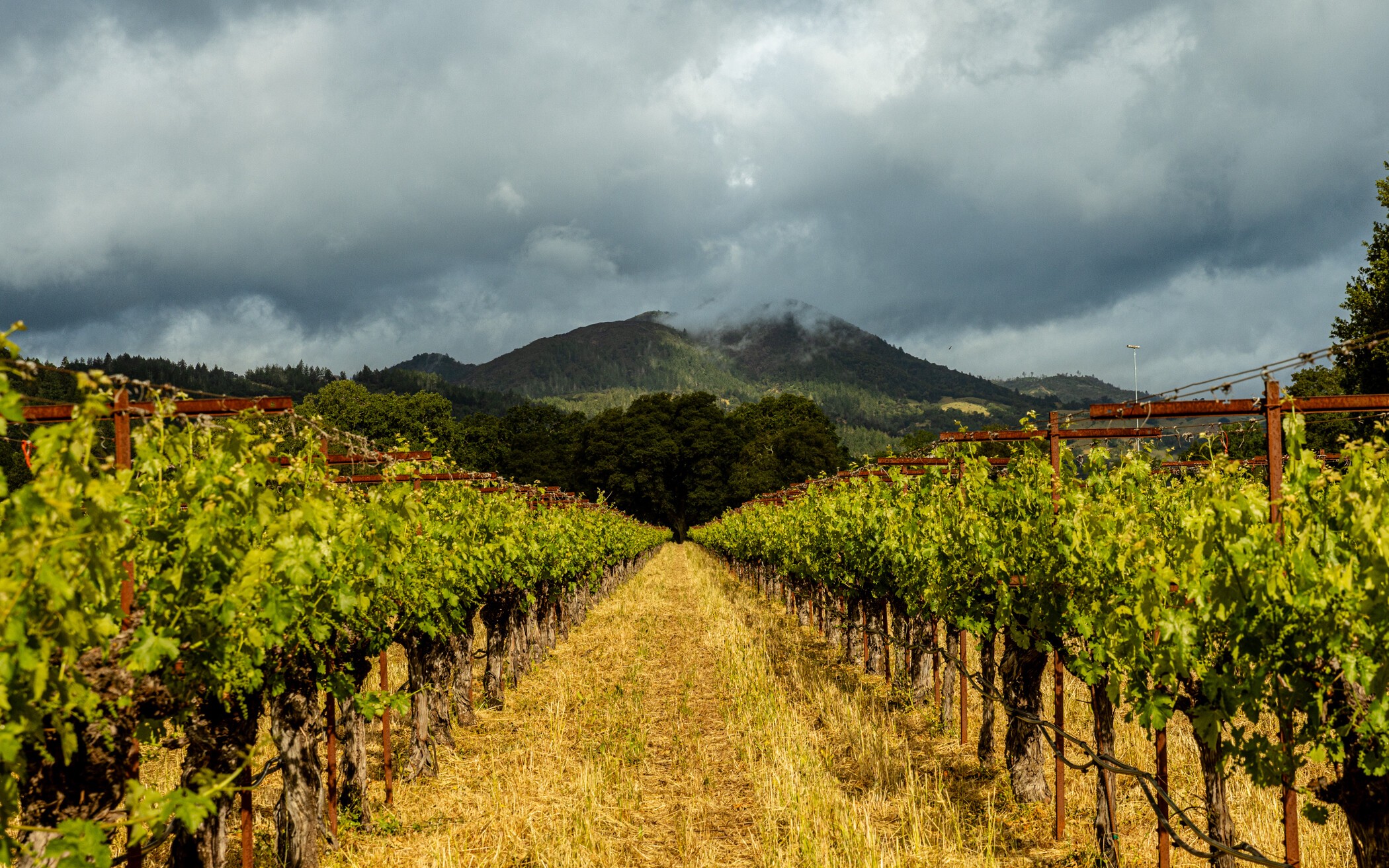
Sustainability is a deeply rooted philosophy at Grgich Hills, not merely an afterthought to winemaking. The winery is among the pioneers of regenerative agriculture in California and has long been pushing the boundaries of what “responsible winemaking” means. All vineyards are certified organic and also bear the Regenerative Organic Alliance designation under the Regenerative Organic Certification program. This approach focuses not only on eliminating synthetic substances, but above all on actively restoring the soil and the entire ecosystem.
Cover crops are commonly used in vineyards to help retain water, increase soil fertility, and promote biodiversity. The natural presence of insects and other organisms eliminates the need for chemical interventions and creates a balanced environment in which the vines can thrive naturally.
Water and energy management also play an important role, as does long-term landscape stewardship. Furthermore, the regenerative approach includes a social dimension—an emphasis on fair working conditions for employees and a sense of responsibility toward the community. The result is not only a more environmentally friendly approach but, above all, healthier vineyards that produce higher-quality grapes and more authentic wines.
Today, Grgich Hills Estate represents much more than just the historical legacy of a single famous victory. It is a symbol of an approach rooted in respect for nature, hard work in the vineyard, and the belief that truly great wine is created first and foremost by the place from which it comes.
Sources:
1.4.2026