The Judgment of Paris: How California Won the Wine World
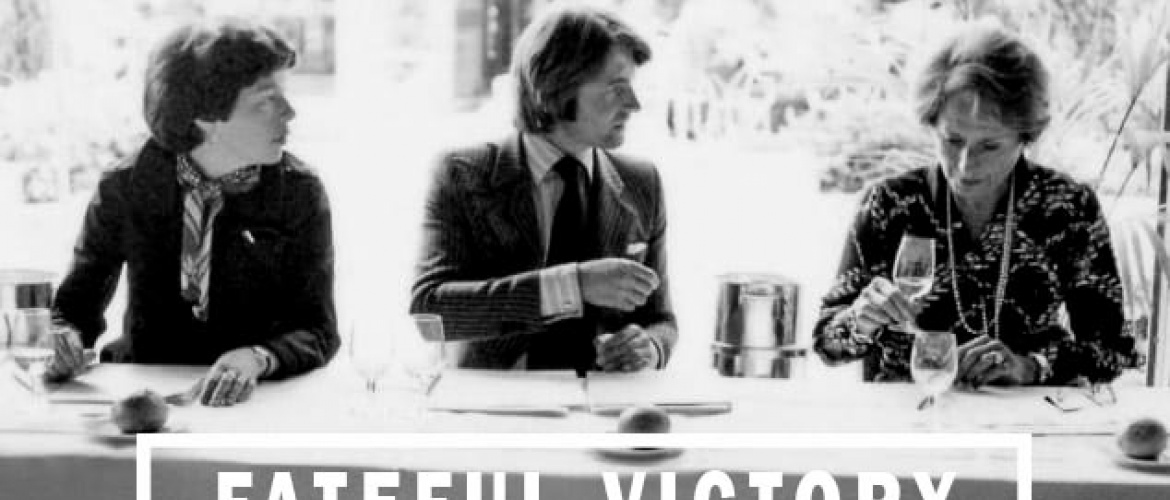
On May 24, 1976, an event took place at the Intercontinental Hotel in Paris that would forever change the perception of the global wine world. Nine leading French wine experts sat down for a blind tasting, unaware that they were about to witness a historic turning point. What was meant to be an unassuming tasting entered history as the Judgment of Paris.
A contest that was never supposed to have a winner
In the mid-1970s, France was considered the absolute pinnacle of the wine world. Bordeaux and Burgundy defined standards of quality and prestige. In contrast, Californian winemaking—particularly Napa Valley—was almost unknown on the international stage.
That is precisely why the idea of placing American wines against French ones seemed like a bold experiment—more of a curiosity than a serious competition to many.
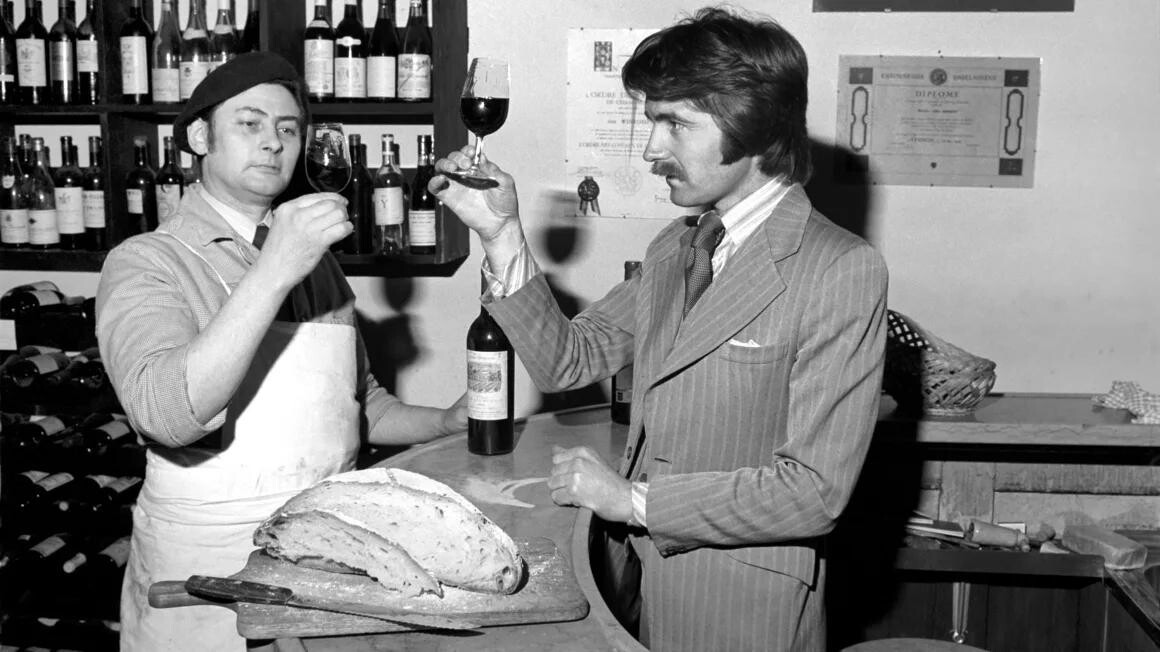
Behind the Judgment of Paris was British wine merchant Steven Spurrier, who in the 1970s ran a wine shop and the Académie du Vin wine school in Paris. Spurrier was known for his openness to international wines and his belief in judging them by quality rather than origin. The idea for the tasting was inspired by his American colleague Patricia Gastaud-Gallagher, who introduced him to the rising quality of Californian wineries.
In the spring of 1976, Spurrier and his wife traveled to California to select the wines in person. In Napa Valley, he visited smaller, then little-known wineries and chose wines purely based on his own judgment—regardless of reputation or price. The bottles were later transported to France with the help of American winemakers, who carried them as personal luggage to avoid complications during shipping. Even this small detail has become part of the story of a tasting that changed the world of wine.
Blind tasting as a revolution
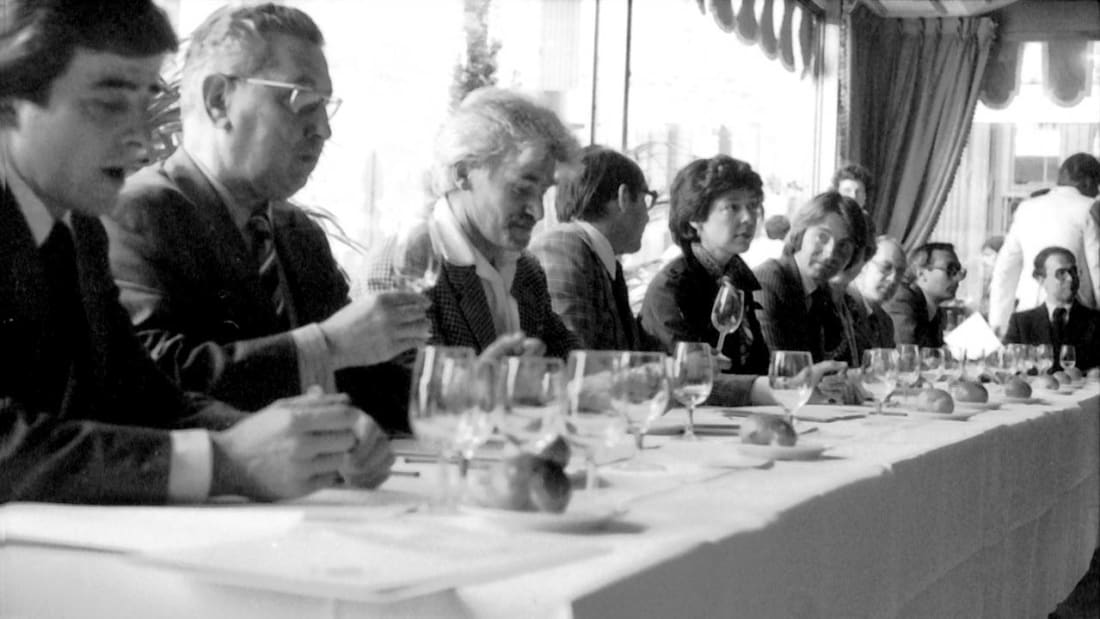
Spurrier invited nine leading French experts to the tasting—including Aubert de Villaine of Domaine de la Romanée-Conti, Odette Kahn, editor-in-chief of Revue du Vin de France, as well as Jean-Claude Vrinat, Raymond Oliver, Michel Dovaz and Claude Dubois-Millot. Their authority and deep roots in French wine tradition gave the tasting real weight—and made the outcome all the more shocking.
The tasting was conducted blind—labels were concealed, and judges evaluated only what was in their glasses. On one side stood top French wines from Burgundy and Bordeaux; on the other, their Californian counterparts: Chardonnay and Cabernet Sauvignon from Napa Valley.
Even during the evaluation, it became clear that the outcome might not be as predictable as everyone had assumed. George M. Taber, the only journalist present, noticed a defining moment when one of the judges tasted a white wine and confidently declared, “This must be California. No nose.” In reality, he was tasting Batard-Montrachet—one of the most prestigious Burgundian Chardonnays in the world. At that moment, it became clear that this tasting might end very differently than anyone had expected.
The unthinkable becomes reality
The results shocked the entire world. In the white wine category, the winner was the 1973 Chardonnay from Chateau Montelena. In the red category, the 1973 Cabernet Sauvignon from Stag’s Leap Wine Cellars took first place. Both wines defeated iconic French labels such as Château Mouton-Rothschild and Château Haut-Brion.
It was a classic David versus Goliath story: young and relatively inexpensive Californian wines outperformed established legends with centuries of history and significantly higher prices. Napa Valley was suddenly placed firmly on the map of the global wine world.
The only journalist present was George M. Taber from Time magazine. In his article, he coined the term “Judgment of Paris,” referencing Greek mythology. The name quickly became the iconic label for the entire event. (The full original article can be found here.)
Reactions from the French judges were mixed. Some questioned the results, while others tried to soften their impact. Odette Kahn even requested her score sheet back to prevent her evaluations from being made public. Yet the outcome could not be ignored. The tasting proved that great wine was not exclusively the domain of traditional European regions.
The Judgment of Paris was not just a one-time surprise. It marked a turning point that opened doors for winemakers around the world. Californian wines gained recognition and gradually earned their place among the global elite.
Follow-up tastings in 1986 and 2006, where the wines were re-evaluated after years of aging, confirmed this shift—Californian wines held their ground and often triumphed again.
A symbol of change
The significance of the event was later recognized by the film industry as well. In 2008, the movie Bottle Shock was released, inspired by the Judgment of Paris. It follows the story of Chateau Montelena and portrays the clash between confident French tradition and the young Californian scene still finding its identity. It is not a documentary, but a dramatized narrative that captures the atmosphere of the 1970s, the determination of Napa Valley winemakers, and the moment of surprise that changed the world of wine.
Today, Napa Valley is one of the most prestigious wine regions in the world. Wineries such as Chateau Montelena and Stag’s Leap Wine Cellars have become symbols of quality and innovation.
The Judgment of Paris represents more than just a tasting. It marks the moment when the wine world became more open and more democratic. It showed that tradition alone does not guarantee quality—and that great wine can be made anywhere the right conditions, knowledge, and passion come together.